Far Far West gives you and your friends a peculiar job: hunt bounties as robot cowboys on a frontier full of undead gunslingers, haunted mines, and magic. Evil Raptor’s first-person co-op shooter supports up to four players online. A contract sends your posse into a dangerous region to complete an objective, face a boss, and reach an extraction point with the mission rewards. Between runs, the town gives you places to spend those rewards and change what you bring on the next trip.
A bounty starts at the town sheriff
Your missions begin in a ramshackle frontier town. The sheriff’s contracts send a crew of bounty hunters out to track dangerous targets and claim rewards. A hovertrain carries the group into the field, giving each expedition a clear start and a route back to the hub. The setting puts saloons, desert trails, and mechanical cowboys beside supernatural threats, so a familiar western outline keeps being interrupted by something stranger.
Once you arrive, the run has a main objective that gives the crew a reason to move across the map. The exact task can range from protecting a payload or drill to preparing a gas bomb, firing a huge laser, or launching a missile. Some objectives ask you to interact with machinery or complete a small puzzle while enemies close in.
The regions are built for roaming between marked tasks. Along the way you can encounter side activities, treasure, mining outcrops, secrets, and characters with their own requests. A short diversion might mean matching symbols, restoring a power connection, or finding a target in the environment; another can send you after a local quest or collectible. These stops offer additional ways to earn resources, while also giving the crew a closer look at the odd corners of each region. Lighthouses provide a way to discover what a mission map contains: climb to the top and complete its minigame to reveal the map and its special locations.
A run has a destination, but the route can wander
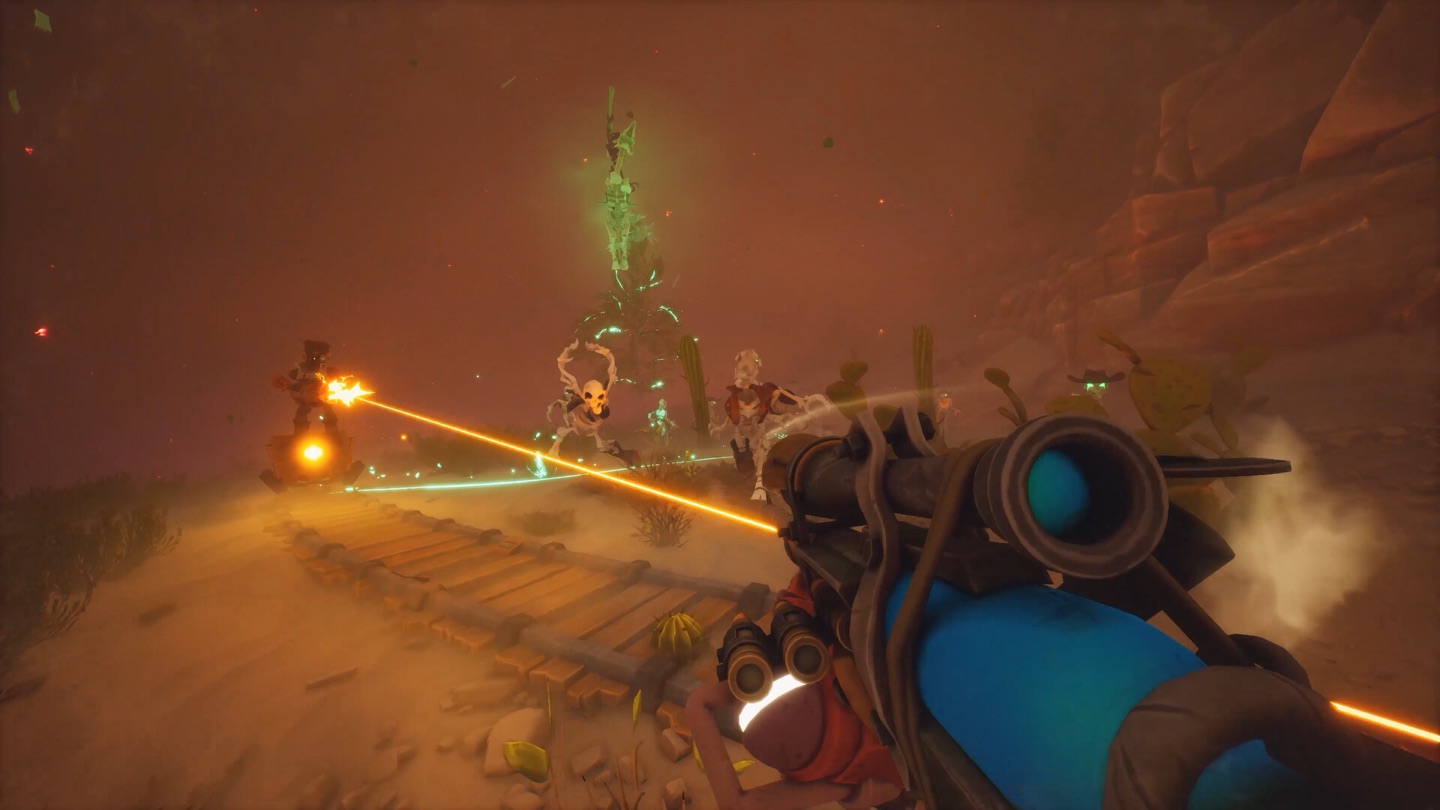
Between the train drop-off and the end of the mission, optional objectives and rewards can pull your crew away from the marked route. You might investigate a chest or mining spot, help with a side quest, then return with extra loot. Dusty paths, canyons, and strange structures give those detours a physical setting, with fights that can spill between obstacles.
Mission objectives and layouts vary, but the contract format remains recognizable from one trip to the next. If your group wants a different mission structure every time, that repeated format may feel familiar.
The game also fills the frontier with diversions that lean into the western comedy. There are robot cattle to herd, cactus families to reunite, a darts game in town, and horse-riding activities. Other tasks lean more toward odd machinery or supernatural puzzles. Those examples show the range of tone: one moment your crew is working through a practical objective, and the next you are trying to make sense of something that sounds like a joke from a haunted cowboy story.
Bosses make the contract more than a checklist
Completing the main task does not send the posse straight home. A powerful enemy appears as the mission’s boss encounter, and the adversary can be a giant undead threat or the ghost train that haunts the frontier. The fight takes place amid the same pressure as the rest of the run: regular enemies can continue to crowd the area, and your group’s weapons, spells, health, and ammunition all matter at once.
Once the boss is defeated, extraction becomes the next leg of the mission. You need to reach a train station, call for the train, and hold out until it arrives. Enemies keep coming during that wait, so the end can turn into a moving fight across the map followed by a last stand at the pickup point.
There is no opposing player crew trying to take your equipment during extraction; the pressure comes from PvE hazards and the train’s arrival.
Guns and spells share the same firefight
The robot-cowboy idea is not just decoration. Your character carries firearms and spellcasting into the same first-person fights, and the game lets you switch between the two. The weapons include familiar western shapes alongside more fantastical equipment, while spells bring a second set of tools with cooldowns. Movement is quick, with jumps and a dash adding a more airborne pace to fights than a slow, grounded western shootout.
Magic is organized around several elemental schools, including fire, acid, electricity, frost, voodoo, and cactus abilities. The spells do different jobs: some hit enemies directly, while others create hazards, control space, heal, or move the caster around. For instance, a cactus spell can put a mine or turret on the field, while voodoo magic can drain health from enemies or charm them. Electricity has spells that alter projectile behavior or help you move through a fight.
Spell effects can also interact. Acid left across the ground can be electrified, and the right combination can create a fire tornado. That creates room for combinations within your own loadout as well as between players: one spell can leave an effect behind for another to build on, and your friends can bring different kinds of magic into the same fight.
Builds grow between missions
The game does not lock your cowboy into a fixed class. You combine weapons, spells, utilities, and upgrades to make a build, with perks that can push toward spell damage, healing, headshots, mobility, or other effects. A character who leans into support can bring healing or tools that obstruct enemies; another setup can put more emphasis on direct damage. Your friends can shape those roles through their gear, with no fixed roster of characters your party needs to fill.
There are two time scales to those choices. During a mission, temporary Jokers can change your run as you collect them. Some affect movement, damage, spell cooldowns, or what happens when you hit an enemy. They belong to that trip, while gold, souls, blueprints, and other resources can go toward longer-term upgrades and unlocks. Weapons and spell schools gain levels as you use them, opening more ways to shape a loadout over time. In-mission Uranium gives you a separate currency for mission purchases, earned from activities such as defeating elite enemies and completing side objectives, quests, secrets, or lighthouses.
Back in town, vendors provide the practical link between a completed bounty and the next one. You can upgrade guns, spells, and character abilities, and unlock cosmetic looks for both your robot cowboy and horse.
Spells and melee can protect your friends
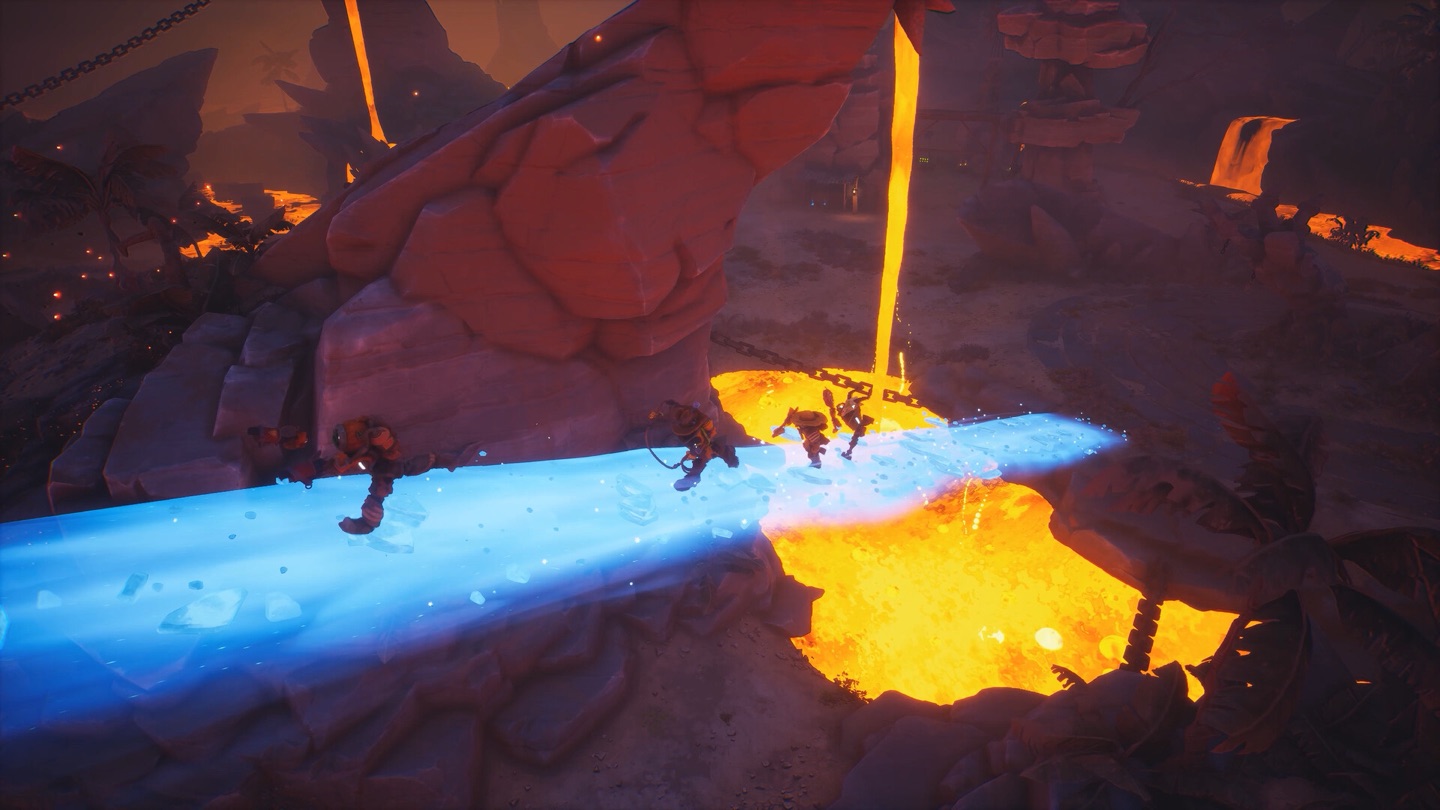
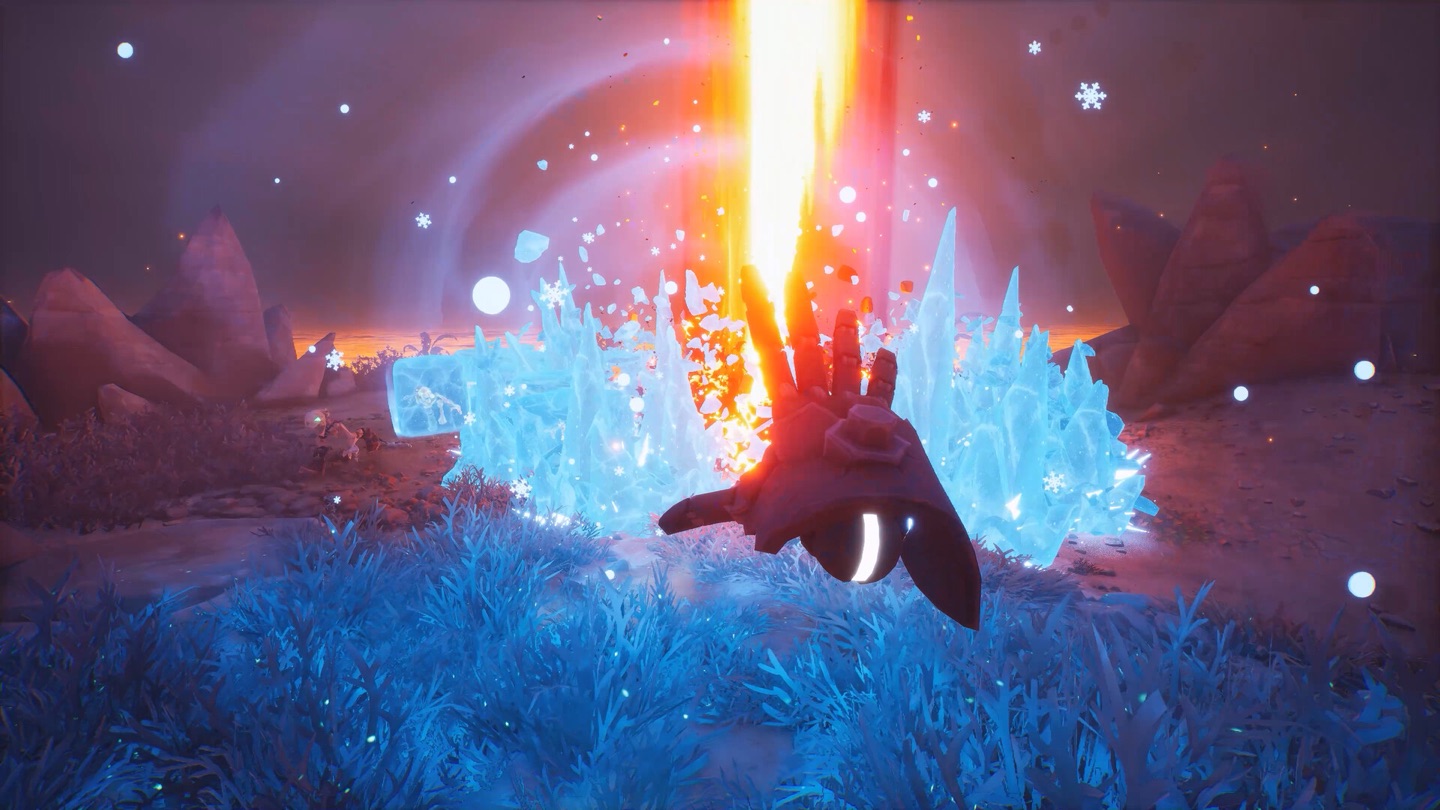
The Frost school makes group support unusually visible. Its Cube spell can turn you or an ally into an invulnerable ice cube. Bridge lays down an icy crossing that shields allies who cross it; Glaze damages nearby enemies while shielding nearby friends, and Blizzard follows its caster while damaging enemies and shielding allies. Frost can also freeze enemies, and applying it grants shield points. These effects let a spell loadout help the whole posse survive, rather than only adding another source of damage.
Melee equipment adds another way to share the fight. The Banjo takes a weapon slot and can heal you and nearby allies in a zone; its slower attacks are paired with support value. The Knuckles and Lasso take weapon slots too, trading ranged attacks for close-range hits and charged effects. One Lasso ability can propel its user backward and let them fly, while another instantly refills its charge when you cast a spell. That means one player can link magic and movement, while a Banjo player brings a healing zone into the same hectic encounter.
These systems create co-op interactions without fixed classes. A friend’s Frost Bridge can protect allies crossing it; another’s healing zone can keep nearby players going; offensive spells and melee weapons add damage or control. A group can see different contributions in the fight through the tools equipped, even when everyone builds from the same pool of characters.
The frontier is played for strange atmosphere
Far Far West starts with dusty saloons and open desert, then keeps breaking that western image with supernatural details. Haunted mines, reanimated skeletons, storms, floating or impossible structures, and an enormous ghost train sit within the same setting. The result is closer to a spooky cartoon frontier than a historical western. Robot bodies and magic belong naturally in its version of the West because the whole place has been built around that kind of playful mismatch.
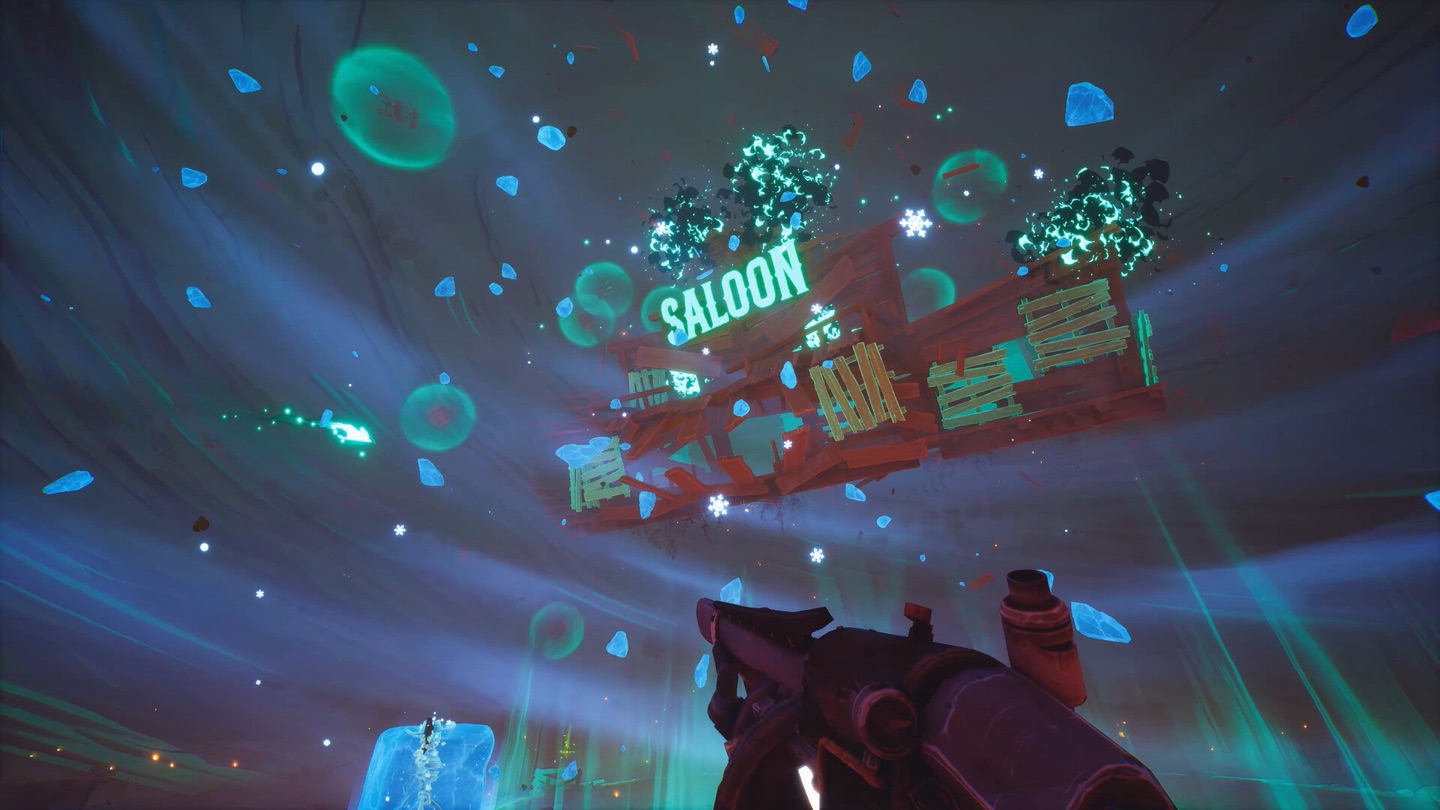
The atmosphere follows you into the fights. A storm can fill the air with spectral shapes; a saloon can hang above the ground, and a railway crossing can become a shooting lane between canyon walls. The art direction treats all of this as part of one frontier, with robot cowboys and strange magic sharing space with saloons, tracks, and desert trails. Your group gets a broad, playful supernatural setting, not a historical western or a serious tactical war story.
Is it a fit for your group?
Far Far West remains in Early Access, with online co-op for up to four players.
The group fit is clearest if your friends enjoy fast PvE shooters with a repeated mission arc, varied objectives, and builds that change as you unlock things. Objectives ask the crew to interact with the world as well as fight, and spells can protect allies or combine into new effects. Players who want a serious western tone, player-versus-player extraction, or a different mission structure every time may find its priorities elsewhere.
Evil Raptor plans to add more content, replayability systems, long-term progression, enemies, modes, weapons, and cosmetics as development continues.