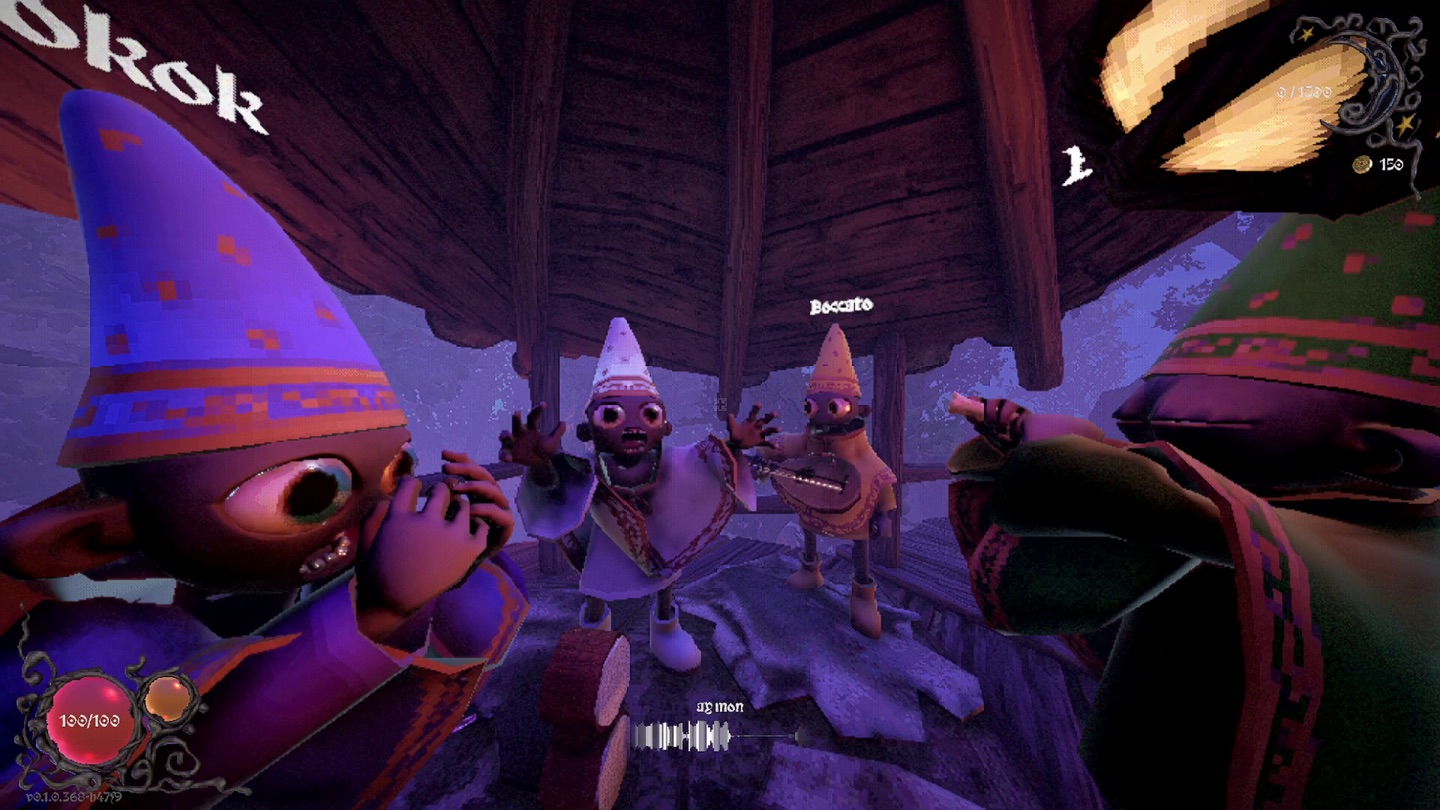
YAPYAP sends you and your friends into a rival wizard’s tower as a crew of small, pointy-hatted minions. Your master wants the place vandalised; its magical inhabitants would rather you stopped. The online co-op mode supports two to six players, giving the group a shared target and a spell system built around spoken incantations.
A shared target for a tower-wide mess
Your job is to meet a vandalism target for the night. Pianos, rugs, toilets, furniture and other objects in the archmage’s tower can contribute to it. Breaking a piano, clogging a toilet or otherwise inconveniencing the wizard adds points toward your group’s target. The room’s ordinary furnishings become part of the score.
Each tower visit is timed, so your group has a window to work toward the target and find its way back out. A compass points toward the dungeon exit, while the vandalism quota measures how much chaos you have caused. The two measures give the raid separate endpoints: enough damage for the master, and a route back out of the tower. Patrolling creatures share the same rooms as the objects that contribute to your score, putting the job and the danger together. In the extraction room, players pondering the Orb can be heard by the teammate they are spectating.
Magic gives the group more than one way to meddle
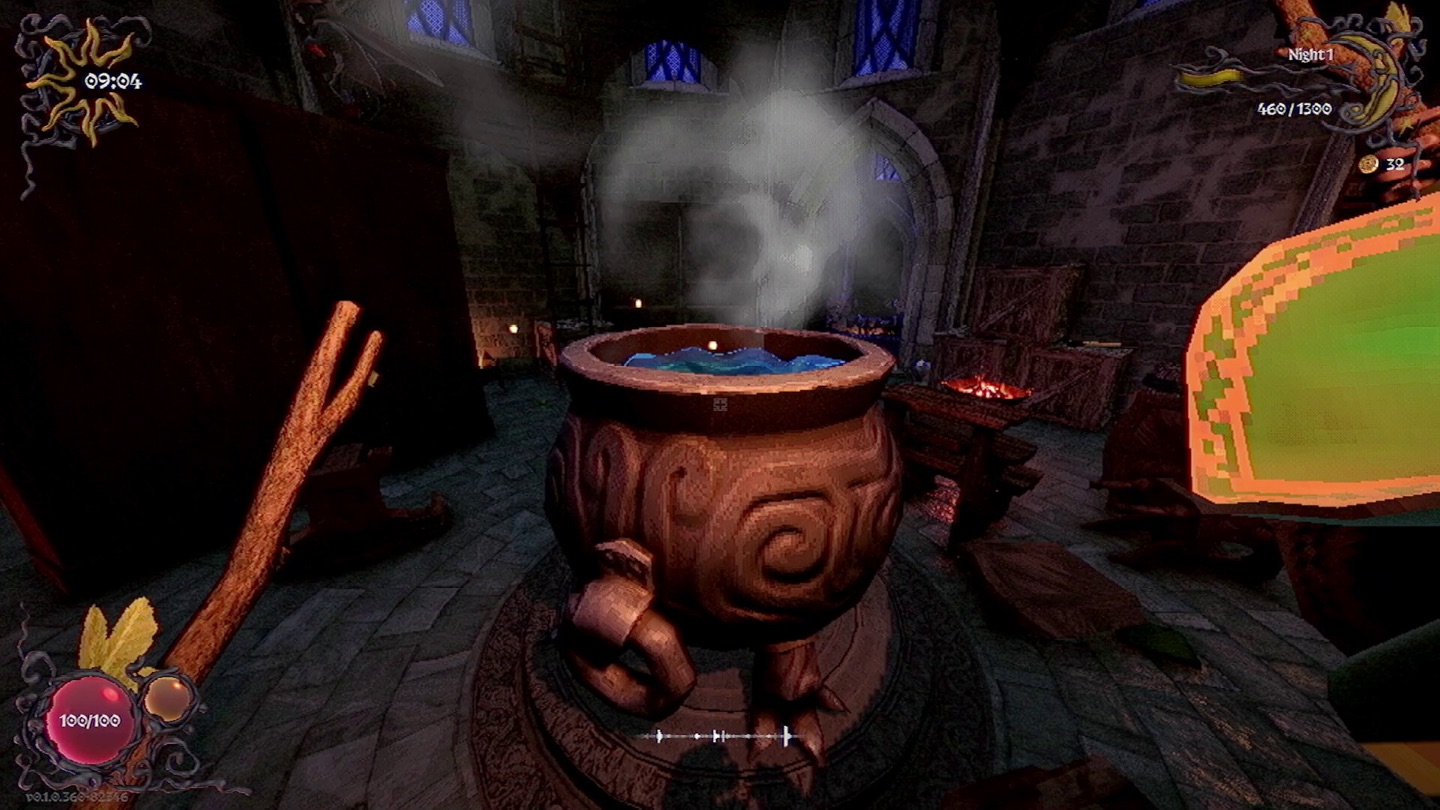
YAPYAP’s spells reach beyond attacking monsters. You can push, pull, smash, launch and float objects; other magic can teleport, clone, confuse, disguise or transform things. One of the transformations is called “fishify.” These effects change where objects are, what they are doing, or what form a creature takes.
Wands carry these spells, with different magic for movement, object manipulation, transformations and attacks. Additional wands bring their own sets of incantations; you can find them in tower chests or buy them for gold at the house merchant. A room full of furniture gives a launch spell a different context from a corridor with a guard in it. The same toolkit can affect a tower, a creature or your own wizard. Specific spells have specific uses: Grab Ana can seize and fling an NPC, while Ignis Tongue can damage the Eye monster. The spell list reaches from physics and movement into these stranger encounters.
The wand families give those effects distinct jobs. Wind magic includes Aero, which shoves an object, and Up-Dog, which lifts its caster; telekinetic spells can knock a target away or make objects float. An illusion wand can send a clone ahead or turn its caster into a chair, while the Blessed wand includes spells that shield or heal a teammate. The spell kit reaches beyond the shared damage target into movement, defence and tricks involving the tower’s occupants.
Wands and tools occupy your minion’s hands. Only the active hand can use its item, and carrying a second wand gives you another set of spells to switch between. A torch, for instance, and a wand represent different uses for the same limited hand space. The equipment system therefore shapes what is ready in the middle of a run, while the other minions work with their own wands and objects.
Casting is also available while running and jumping, so the voice input is part of moving through the tower. You can speak an incantation while your minion is already in motion, rather than treating spell use as a separate turn or a menu-based action. The game even allows you to cast while riding a fish, letting a transformation become part of how a spell is used rather than a one-off gag.
Contracts add specific chaos tasks to a tower visit. They can ask you to burn books, transform enemies or launch monsters, and their points count toward your progress. The contribution rises as the shared quota advances. They do not replace the vandalism target; they give the same spell and object systems another objective during the timed raid.
Voice casting shares the room’s conversation
Voice casting makes spoken incantations part of the control scheme: you speak into a microphone, and clear enunciation matters. There is also an optional spell-wheel selection mode for casting without saying incantations. That changes how you choose a spell, while voice casting remains the game’s distinctive way to use magic.
Spoken casting sits beside the conversation instead of replacing it. Friends also hear one another through proximity-based audio: as they move farther apart through the rooms, their voices shift with distance. While the game listens for an incantation, the group can still talk about the tower around them.
The “Spell Voice Cast on Hold” setting makes voice-cast spells activate only while you hold the right mouse button. You can also set the spell language separately from the game’s text language. Spoken spell support includes English, French, German, Italian, Japanese, Korean, Mandarin and Russian, so friends can use different text and voice languages. This separation is useful for a multilingual group: the game can display in one language while spells are spoken in another supported language.
For online play, one player hosts from the house lobby, where friends can join through the in-game Orb or the Steam overlay. The invitation starts from the host’s house rather than the main menu, and the same house is the group’s shared space between tower visits. Friends can join after the tower trip has started; a late arrival does not count as dead against the quota. The host can remove players; anyone removed cannot rejoin that lobby until a new game begins. There is a potion room for ingredients, a merchant, and room to leave wands, torches and other equipment. It connects the online session to the longer run: friends gather in one place, take a timed trip into the tower, then return to the house before another night.
Voice casting can make conversations and spell input overlap, while the spell wheel gives friends who do not want to speak incantations another way to select magic. Proximity audio adds a separate layer to the group conversation as minions move through different rooms.
The tower is occupied
The archmage’s tower has its own residents. Some creatures patrol the halls to protect a study; others are failed magical experiments, and some are beings of darkness the archmage does not even know about. Your objective is vandalism, but the inhabitants put danger into the rooms between you and your target.
The game lets you stay quiet, create distractions, hide or run. Its contrast comes from sending small, mischievous minions into a place built and occupied by powerful magic. Wands can affect creatures as well as surrounding objects, so exploring, causing damage and dealing with threats can overlap. Some magic changes a creature’s form; another spell can damage the Eye monster. The threats are part of the same spell sandbox as the vandalism, rather than a separate match that starts after the objective is finished.
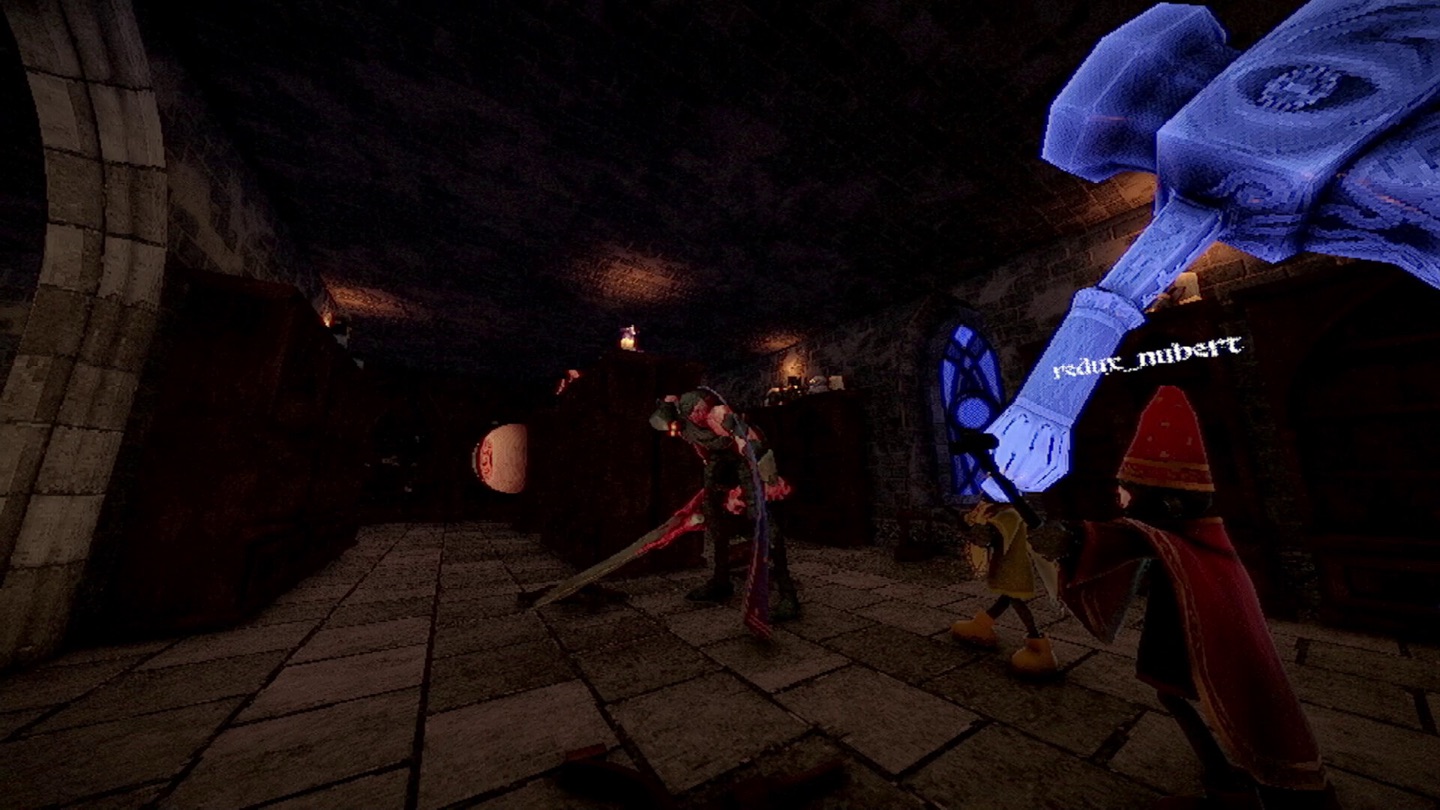
The inhabitants vary in appearance too. A tall, birdlike figure stands under a stone arch as colorful minions raise their wands toward it. Elsewhere, an armoured creature with a sword fills a dim corridor while two smaller wizards face it. Bright hats stand out against the dark stone of the stronghold. Wooden beams, narrow corridors, bookshelves and stone rooms make the rival’s tower feel like a place built for wizardry, even as its furniture becomes a vandalism score. Runs begin in smaller starting rooms before the group moves deeper into the castle.
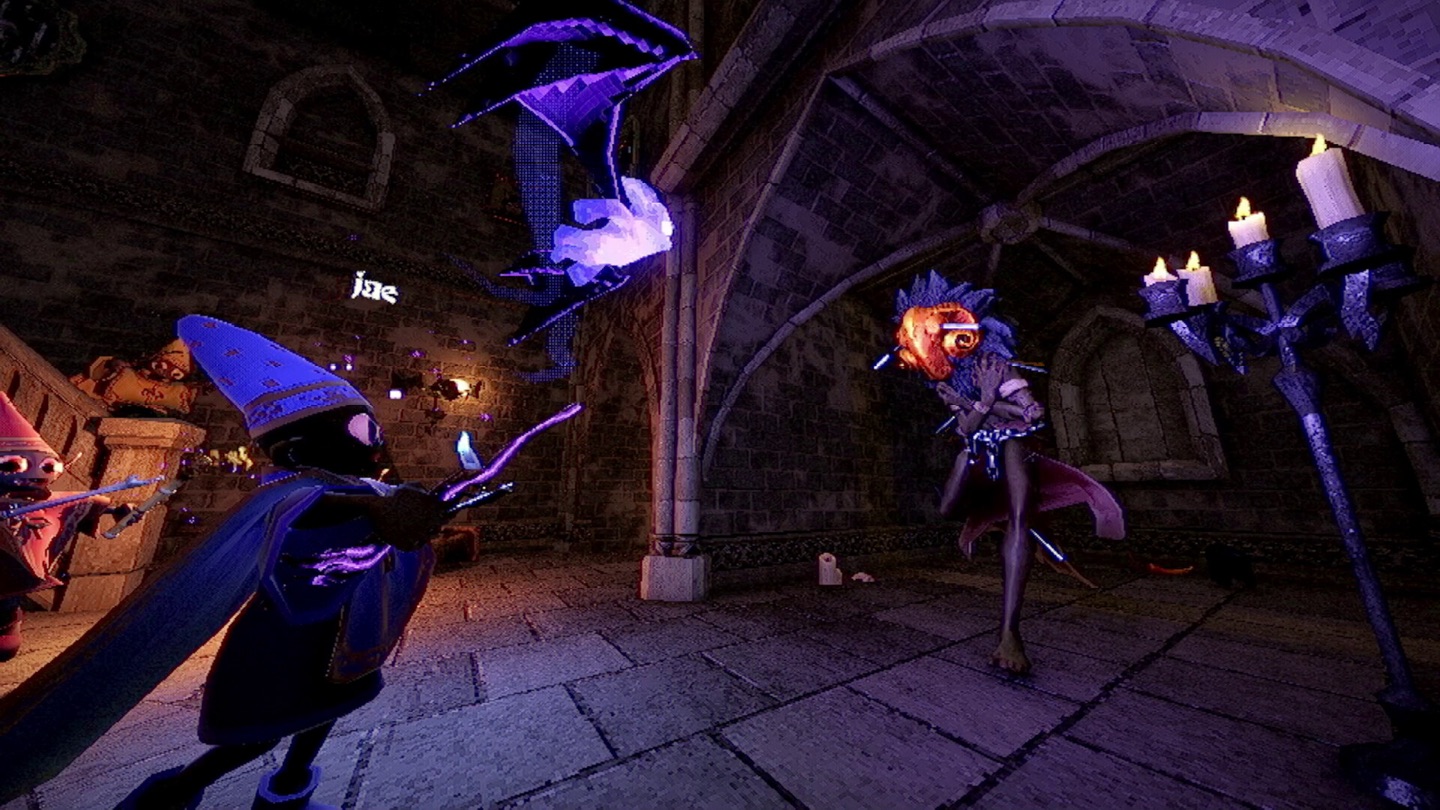
Escaping the tower is part of the job. The building is a horror setting built around sabotage: damaging a room is only one part of the visit, and your group has to make it back out of the defended place you were sent to vandalise.
What carries from one night to the next
The tower visits sit inside a run with multiple nights and a shared hub between them. Equipment and supplies such as wands, torches and potion ingredients persist in the hub between nights. Jump potions can be carried in stacks of up to three, and stamina increases are saved as part of the run. A guidance panel helps new players with the game’s basics before their first tower visit, while Orbs can be sold to the merchant for 25 gold. Your group’s kit and supplies carry from one visit to the next alongside the rising vandalism quota.
When a player does not extract, the Lost and Found can return one item for them; wind wands are excluded. This recovery is separate from equipment kept in the hub between nights. The house preserves items left there, while Lost and Found covers one item per player after an unsuccessful return. The distinction gives the group a place to keep useful gear between nights and a limited recovery for what someone carried into a trip but did not bring out.
The game includes a revive mechanic as well, so a fallen player can return to the group during a run.
A fit for a larger online group
YAPYAP’s online co-op supports two to six players total: one player and up to five friends. The full group can share the same tower and vandalism target, with everyone playing as one of the minions serving the wizard. Online play requires a broadband internet connection. Its fit is clearest for groups who want shared sabotage, spell-driven movement and a tower full of magical threats.